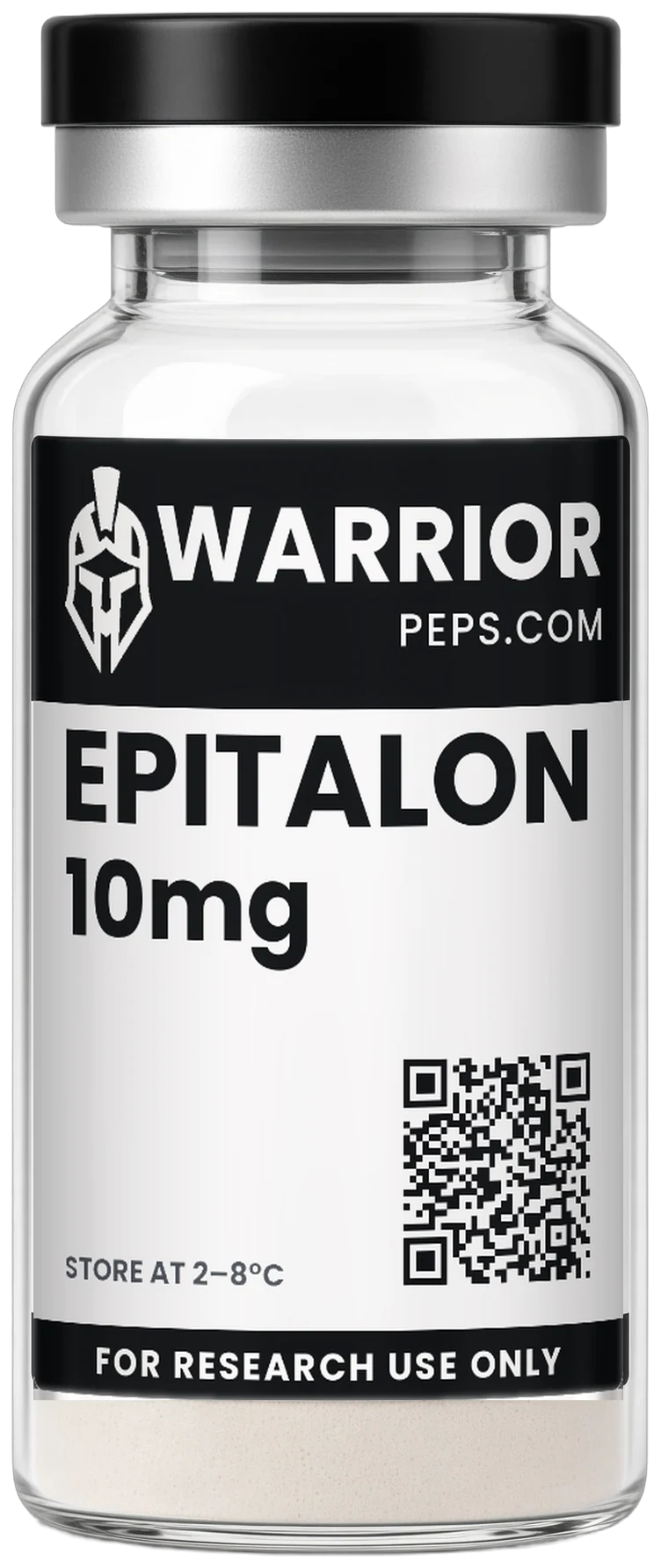
Epitalon 10MG
A four-amino-acid peptide from pineal research. 10mg per vial.
What Epitalon is, in plain English.
Epitalon (also written Epithalon) is a synthetic tetrapeptide, four amino acids in the order alanine, glutamate, aspartate, glycine (Ala-Glu-Asp-Gly), with the molecular formula C14H22N4O9, a molecular weight of about 390.4 g/mol and the CAS number 307297-39-8. It was identified as the putative active component of Epithalamin, an extract of cattle pineal gland studied in Russia, and is itself made by synthesis. It is commonly researched for its relationship to telomerase, the enzyme that maintains telomeres, the protective caps on the ends of chromosomes that shorten as cells divide. That telomere work, reported in human cell cultures, is the core of the literature. It is also researched for its part in circadian and sleep rhythms, melatonin in particular, which follows from its pineal origin, and in antioxidant, immune and lifespan models within ageing research, in mice, rats and monkeys. Anyone reading that literature should know where it comes from: most studies on Epitalon and Epithalamin were carried out by one institute, the St. Petersburg Institute of Bioregulation and Gerontology, and work elsewhere has begun only in recent years. It is not a licensed medicine in the UK, the EU or the US. Supplied as 10mg of freeze-dried powder per vial, for reconstitution with bacteriostatic water; store at 2–8°C.