BPC-157 5MG
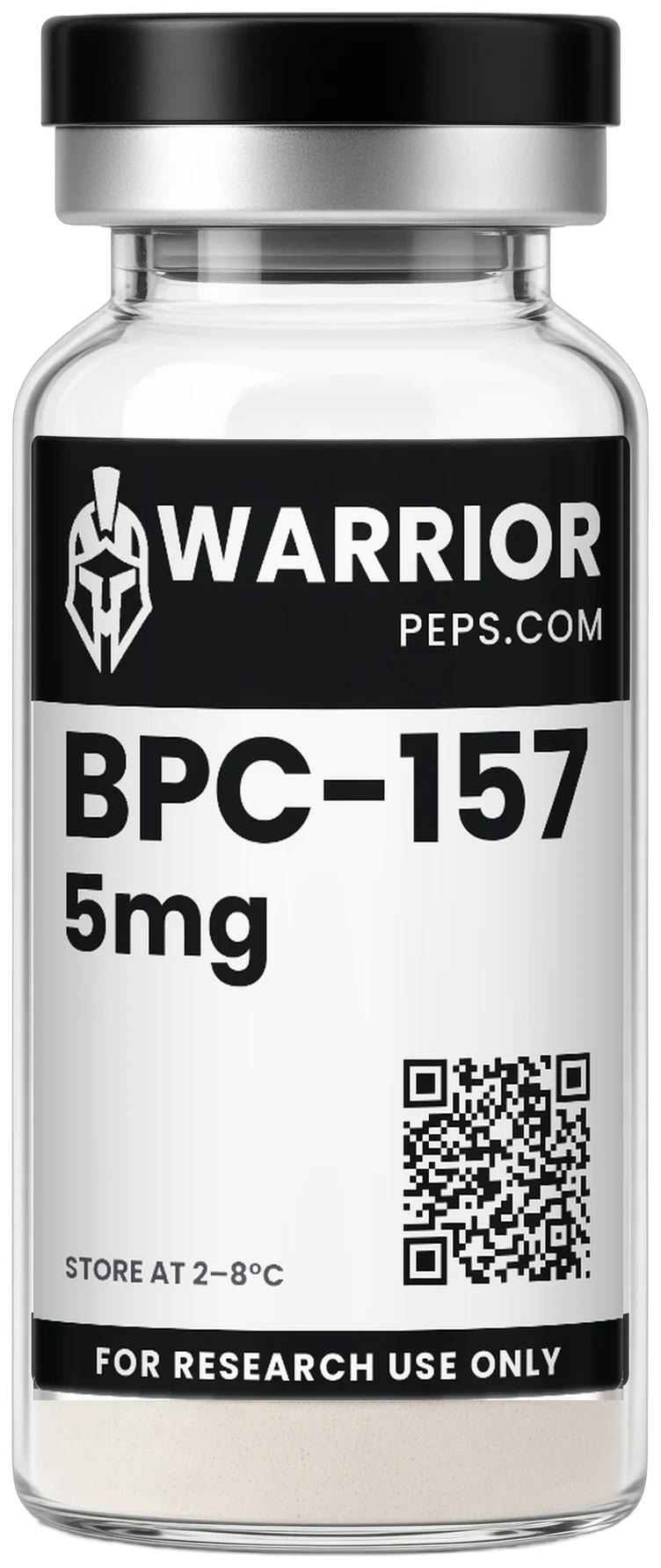
The compound most first-time buyers start with. 5mg or 10mg of freeze-dried powder per vial, held in the UK and dispatched same day.
What BPC-157 is, in plain English.
BPC-157, short for Body Protection Compound-157, is a synthetic peptide: a chain of 15 amino acids in a fixed order (Gly-Glu-Pro-Pro-Pro-Gly-Lys-Pro-Ala-Asp-Asp-Ala-Gly-Leu-Val), with the molecular formula C62H98N16O22, a molecular weight of about 1,419.5 g/mol and the CAS number 137525-51-0. It was first described in the early 1990s by a research group in Zagreb, who reported it as a fragment of a larger protein they had isolated from human gastric juice and called body protection compound. Its sequence resembles no other known gut peptide, and the peptide itself is made by synthesis, not extracted. One property set it apart early: most peptides are broken down quickly in the stomach, while BPC-157 is reported to stay intact in human gastric juice for more than 24 hours. That is where its usual name in the literature comes from: the stable gastric pentadecapeptide, meaning a 15-amino-acid peptide from the stomach that doesn't break down there. It is commonly researched in two areas. The first, where the work began, is the gut: models of the stomach and intestinal lining and how that lining maintains and repairs itself. The second, now the larger body of work, is tissue repair in tendon, ligament, muscle and bone models. The mechanisms under study include the growth of new blood vessels and the VEGF signalling behind it, the nitric oxide system, the FAK-paxillin pathway that cells use to attach and move, and growth-hormone receptor expression in tendon cells; its interaction with the dopamine system and its effects on organ tissue are further lines of inquiry. Almost all of this work is pre-clinical: a 2025 systematic review of the orthopaedic literature counted 36 studies, 35 in animals or cell culture and one in people. Published human data come from a handful of small studies, no medicines regulator has approved it, and the World Anti-Doping Agency has prohibited it in sport since 2022. Supplied as 5mg or 10mg of freeze-dried powder per vial, for reconstitution with bacteriostatic water; store at 2–8°C.