GHK-CU 50MG
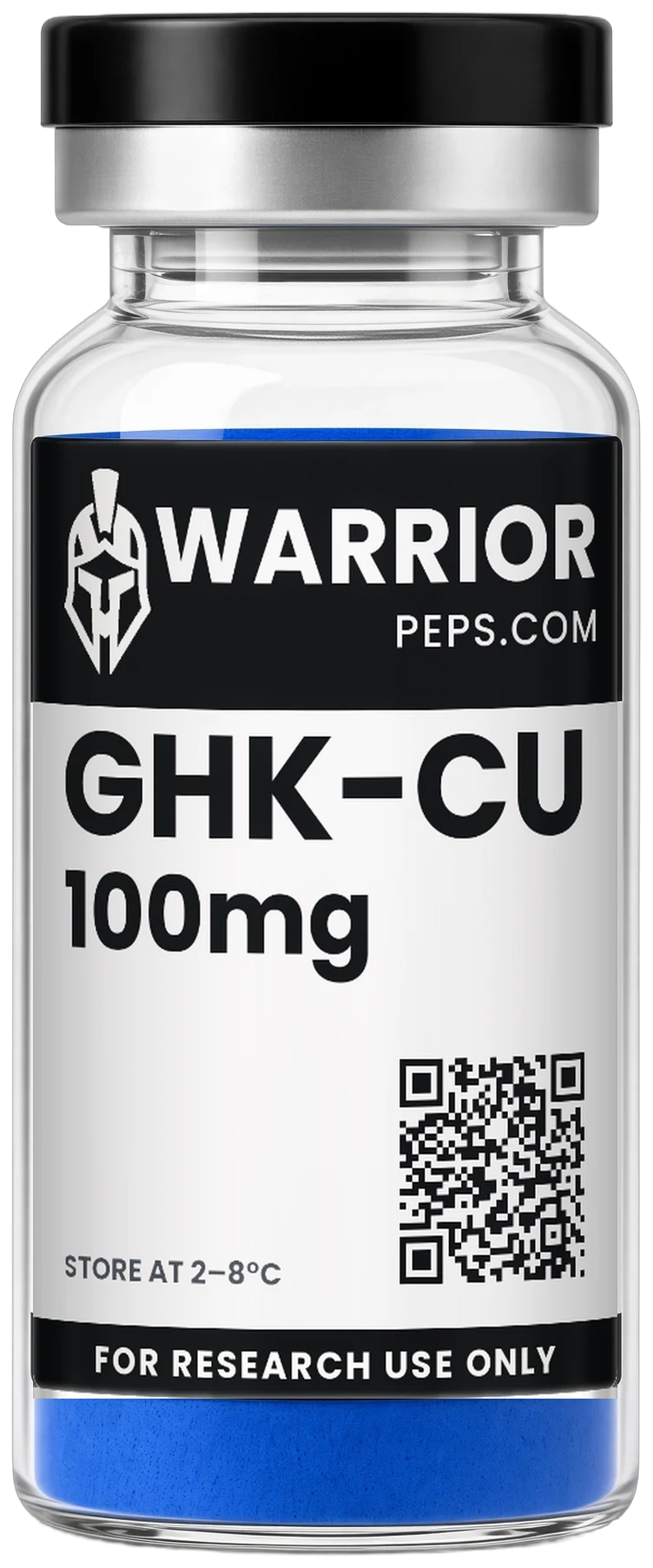
The blue one. A copper-binding tripeptide found naturally in human plasma, supplied as a 50mg or 100mg vial.
What GHK-CU is, in plain English.
GHK-Cu is a naturally occurring tripeptide, three amino acids in the order glycine, histidine, lysine, bound to a copper ion. The peptide on its own has the molecular formula C14H24N6O4 and a molecular weight of about 340.4 g/mol; the copper complex carries the CAS number 89030-95-5. It was isolated from human blood plasma in 1973 by the biochemist Loren Pickart, who was looking for the factor that made liver cells from older donors behave more like younger ones when they were incubated in blood from younger people, and it has since been found in saliva and urine as well. Its plasma level is reported at about 200 ng/ml at age 20 and about 80 ng/ml by age 60, which is what first drew research interest to its role in ageing and tissue maintenance. The peptide binds copper tightly, and much of the literature regards it as a signal that carries copper to cells. It is commonly researched for its part in the production of collagen and glycosaminoglycans by skin fibroblasts, the cells that build the skin's structure, and in wound-repair models, where the attraction of immune cells and new blood-vessel growth are the processes under study. A further line of work looks at its effect on gene expression across large panels of human genes. Most of this is cell and animal work. In people its main use is as a cosmetic ingredient, listed as copper tripeptide-1, and the controlled skin studies behind that are small and short; it is not a licensed medicine. The copper complex is what gives the powder its blue colour. Supplied as 50mg or 100mg of freeze-dried powder per vial, for reconstitution with bacteriostatic water; store at 2–8°C.