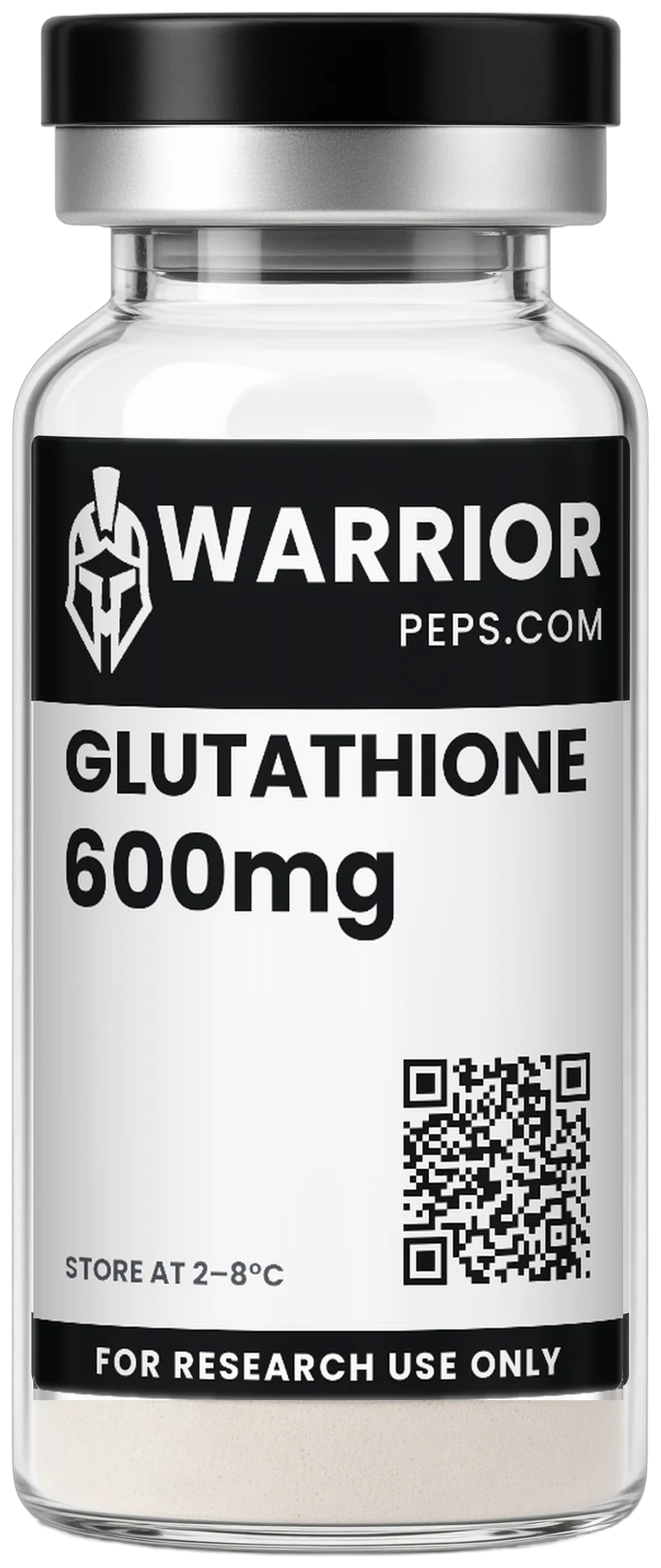
Glutathione 600MG
The body’s master antioxidant — a tripeptide of glutamate, cysteine and glycine. 600mg or 1500mg per vial.
What Glutathione is, in plain English.
Glutathione is a tripeptide of glutamate, cysteine and glycine, made in every cell of the body, with the molecular formula C10H17N3O6S, a molecular weight of about 307.3 g/mol and the CAS number 70-18-8. One of its two bonds is unusual: the glutamate is joined to the cysteine through its side chain, a gamma linkage, and not in the way amino acids are normally joined in proteins. Inside animal cells it is present at 0.5 to 10 millimolar, a higher concentration than almost any other small molecule, and in a normal cell more than 90% of it is in the reduced form (GSH), with the rest oxidised (GSSG). Its cysteine residue carries a thiol group that cycles between those two states, which is the chemistry behind its role in the cell's redox balance and behind the 'master antioxidant' name it is often given. The literature gives it three main jobs: neutralising reactive oxygen species, acting as the cofactor for the enzyme glutathione peroxidase, and attaching itself to foreign compounds so the body can clear them, the conjugation step of detoxification. It is one of the most-studied molecules in biochemistry, commonly researched in redox, detoxification and cellular-stress models, with a literature that runs from cell biology to clinical work. Two fills in the range: 600mg or 1500mg of freeze-dried powder per vial, for reconstitution with bacteriostatic water; store at 2–8°C.