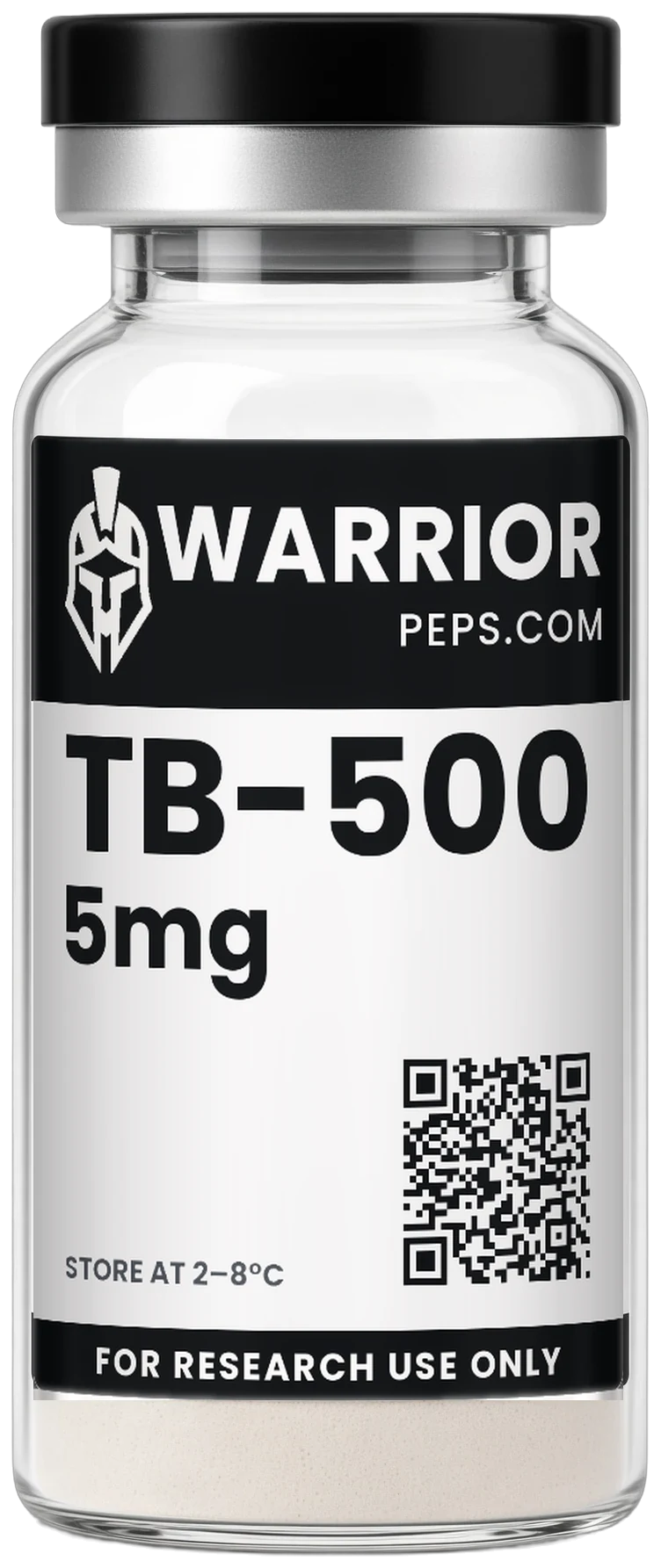
TB-500 5MG
The compound most often ordered in the same basket as BPC-157. 5mg or 10mg of freeze-dried powder per vial.
What TB-500 is, in plain English.
TB-500 is a synthetic peptide derived from thymosin beta-4, a 43-amino-acid protein found in nearly all human and animal cells. The thymosins were named for the thymus gland, where the family was first found, but thymosin beta-4 is made by nearly every cell type and its main role lies elsewhere: it binds actin, the protein that forms the cell's internal scaffolding, and so governs how cells change shape and move. TB-500 is built around the part of the protein that does that binding. In the analytical literature the peptide sold under this name has been identified as an acetylated seven-amino-acid fragment, residues 17 to 23 of the parent sequence (Ac-LKKTETQ), which contains the stretch known as the actin-binding motif. That link to cell movement is why it is commonly researched for its role in new blood-vessel formation and tissue regeneration: the migration of cells into damaged areas is the process under study. It is also researched for its part in the inflammatory response and in scar-tissue formation, most often in muscle, tendon and ligament models, with heart-tissue and corneal repair as further lines of inquiry. The human evidence belongs to the full-length protein, which has reached mid-stage clinical trials in skin-wound and eye-surface conditions; the fragment itself has a much smaller literature. No medicines regulator in the UK, the EU or the US has approved either, and the World Anti-Doping Agency prohibits thymosin beta-4 and its derivatives in sport, naming TB-500. Supplied as 5mg or 10mg of freeze-dried powder per vial, for reconstitution with bacteriostatic water; store at 2–8°C.