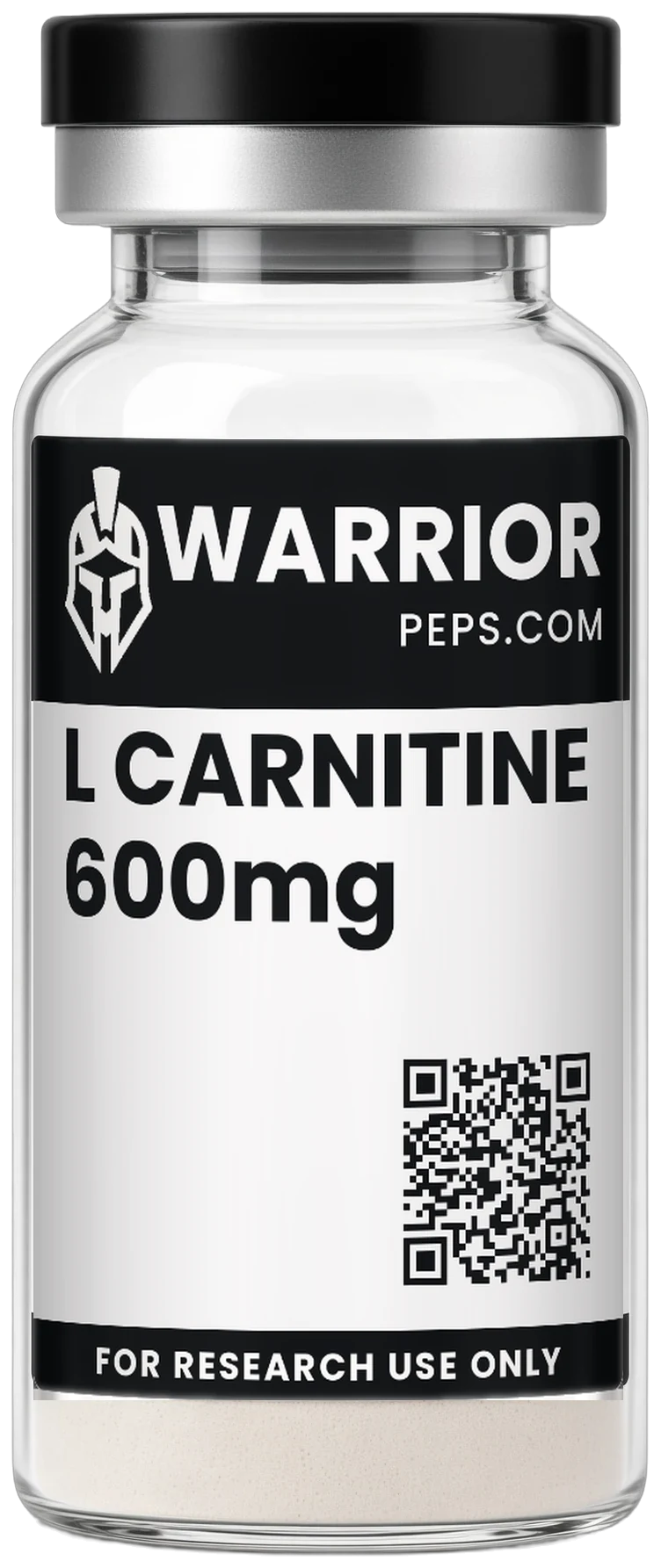
L-Carnitine 600MG
A naturally occurring compound involved in mitochondrial fatty-acid transport and energy metabolism. 600mg per vial.
What L-Carnitine is, in plain English.
L-Carnitine is a naturally occurring compound and not a peptide: a small quaternary ammonium molecule with the formula C7H15NO3, a molecular weight of about 161.2 g/mol and the CAS number 541-15-1. It was first extracted from meat in 1905, and its name comes from the Latin for flesh. The body makes it from the amino acid lysine and holds nearly all of its store, about 20 grams in an adult, in skeletal muscle. Only the L-form occurs naturally in animals. It has a central role in the carnitine shuttle: long-chain fatty acids cannot cross the inner mitochondrial membrane on their own, so they are attached to carnitine, carried across and released inside, where they can enter beta-oxidation, the process that turns fat into usable energy. It is studied in laboratory research on fatty-acid metabolism, mitochondrial function and cellular bioenergetics. It is also well documented in people: carnitine is sold widely as a food supplement, and the molecule is an approved medicine in the United States for carnitine-deficiency syndromes. What is supplied here is neither of those. 600mg per vial. For laboratory research use only.